

The cleaning schedule that actually works for a small home is three short sessions a week, not one long one. Monday you clean the wet rooms, Wednesday you do the dry work, Saturday you handle laundry and sheets, and every day you spend ten minutes putting the place back in order. The three sessions take about an hour and a half between them, and the daily reset adds about ten minutes a day. Nothing in it needs a full afternoon, a deep clean, or a product you do not already own.
If you want more ideas in this vein, browse our Cleaning & Organization category.
Why most schedules fall apart

Most plans are written for a big house and a free Saturday. One cleaning company plan, built for a three bedroom home, asks for 90 to 120 minutes in a single block, once a week. Plenty of people manage that once. Then life gets in the way, they skip a week, and the whole thing quietly dies. A schedule does not fail because you are lazy. It fails because it asks for more than your week can give.
Small flats have the opposite problem from big houses. There is less to clean, but nowhere to hide the mess. A sink full of dishes is the whole kitchen. A pile of laundry is the whole bedroom floor. So the fix is not a bigger clean. It is smaller ones, spread out, so no single day hurts. That is the whole idea behind the cleaning schedule in this article.
There is a second trap, and it catches the people who do clean. The Sunday big clean. Everything, all at once, two or three hours, and then a week of slowly sliding back until Sunday comes round again. It works for exactly one week, because it spends the whole weekend on the flat. Spread the same work across three short sessions and a daily reset, and the flat stays at the same level all week without giving up a single evening to it.
The 3-day plan at a glance
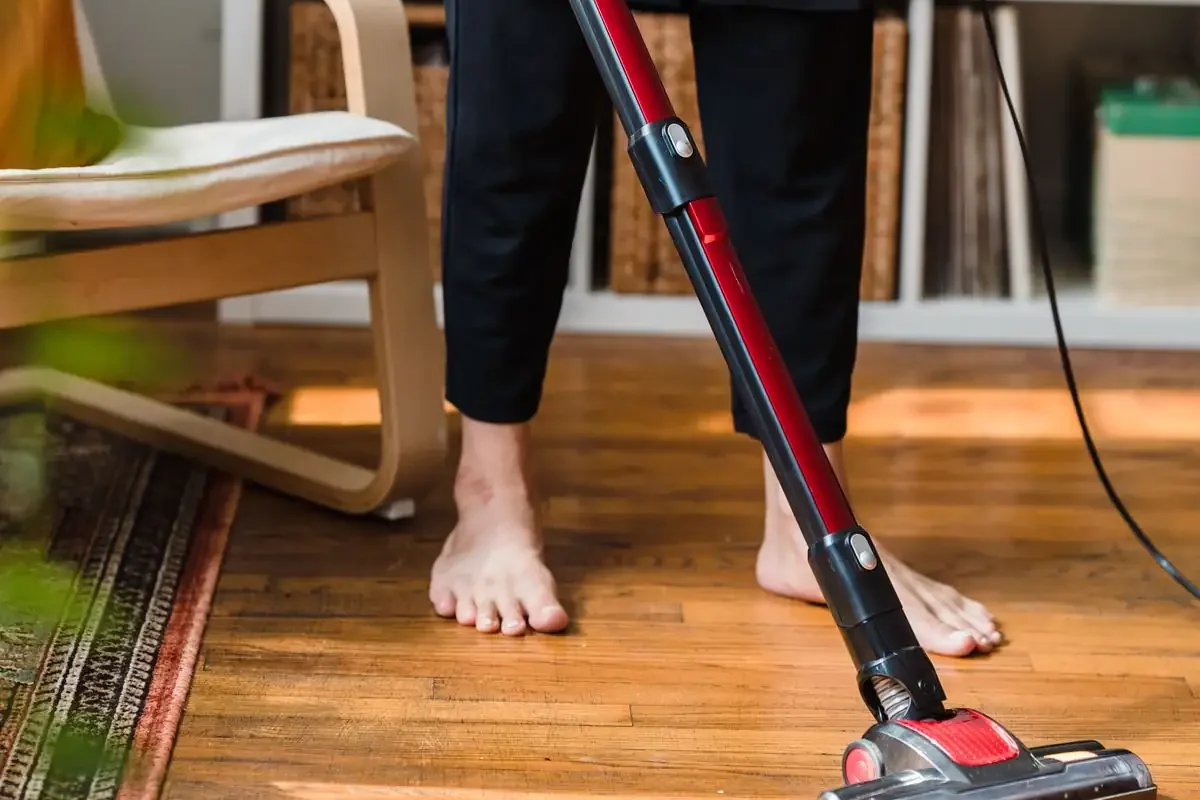
This cleaning schedule fits on one screen. Three sessions, about 30 minutes each, plus a ten minute reset every day. Pick the days that fit your life. Monday, Wednesday and Saturday work for most people because they space the sessions out, but any three days with a gap between them will do. If Monday is your worst day at work, swap it for Tuesday and move Wednesday to Thursday. The days matter less than the gaps. Two sessions back to back will tire you out, and a week with no rest day will not last.
- Monday: wet rooms, about 30 minutes.
- Wednesday: dry work, about 30 minutes.
- Saturday: laundry, sheets and the front door, about 30 minutes of hands-on time.
- Every day: the 10-minute reset.
The sessions add up to about an hour and a half a week. With the daily reset, the full cleaning schedule runs about two and a half hours a week, and most of it happens in ten-minute pieces.
Monday: wet rooms, about 30 minutes
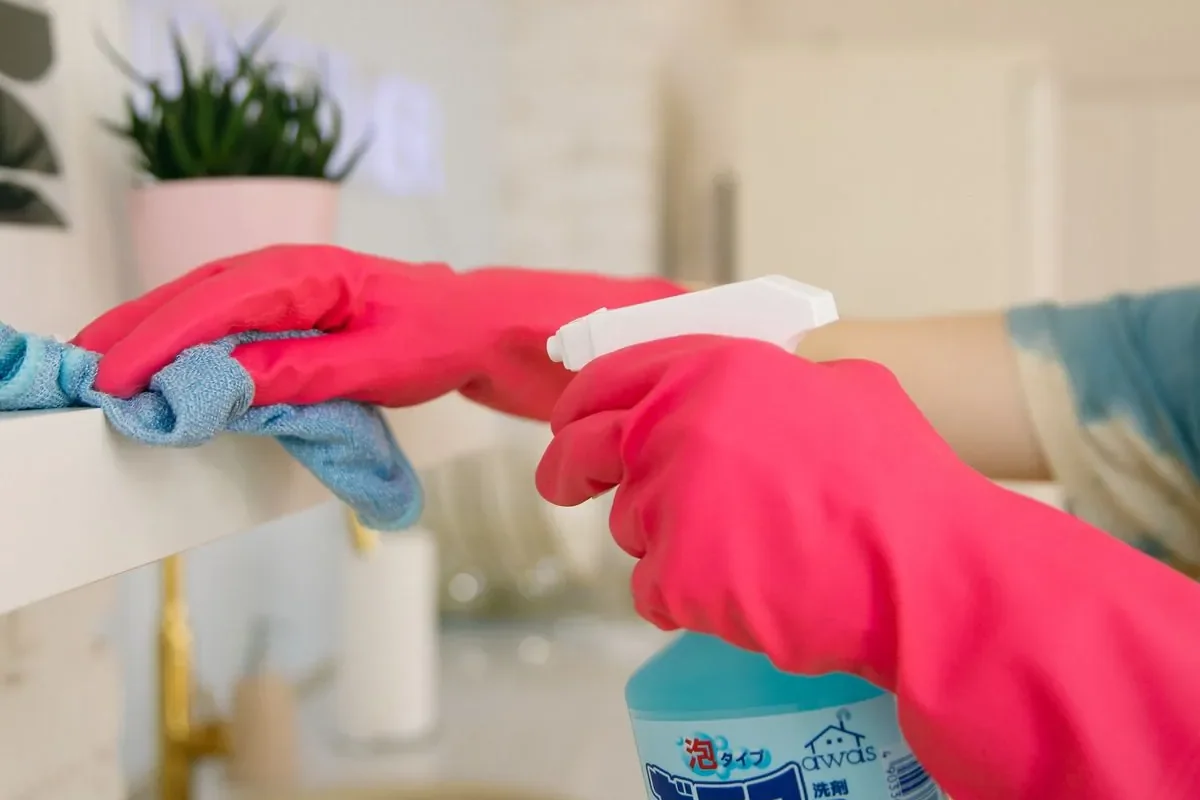
Monday is for water. Kitchen first, bathroom second, and you finish with clean hands and a dry floor. Work top to bottom so you never clean the same spot twice.
- Kitchen counters and sink, about 8 minutes.
- Stove top, about 4 minutes.
- Bin out and a fresh bag, about 2 minutes.
- Bathroom sink and mirror, about 5 minutes.
- Toilet, about 5 minutes.
- Shower, quick scrub and rinse, about 6 minutes.
- Total: about 30 minutes.
Two things make Monday work. First, keep the spray and cloth in the bathroom and a second set in the kitchen, so you never have to go looking for them. Second, start a timer. Thirty minutes sounds short until you try to stretch a job to fill it. Most Mondays finish in 28. Wring the cloth out and hang it over the tap when you finish, and swap the kitchen sponge once a month. A damp cloth left in a ball smells by Wednesday, and then Monday has to fix a problem it created.
Wednesday: dry work, about 30 minutes
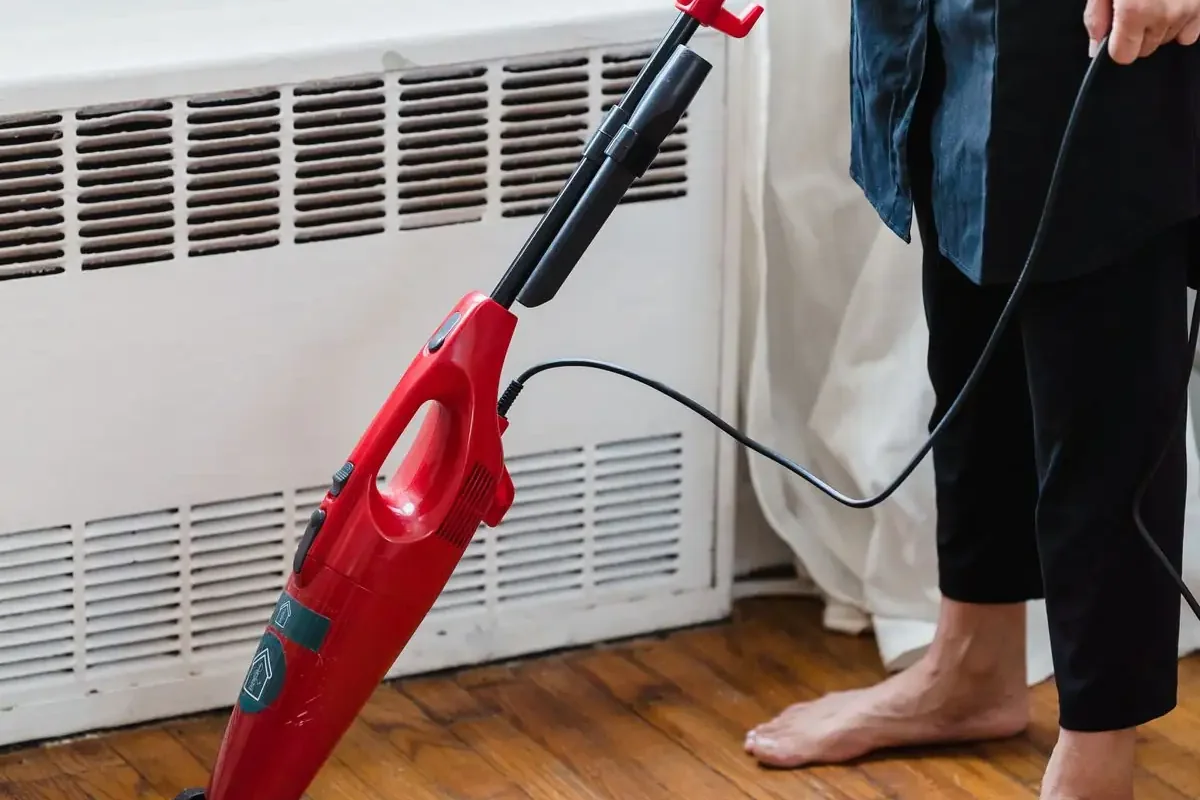
Wednesday is the dry day in this cleaning schedule. No water, no spray, just a cloth, a vacuum and a mop.
- Dust every surface you can reach, about 8 minutes.
- Vacuum the whole flat, about 10 minutes.
- Mop the kitchen and bathroom floors, about 7 minutes.
- Cushions straight, living room tidy, about 5 minutes.
- Total: about 30 minutes.
In a small flat, vacuuming takes ten minutes, not half an hour, and that changes everything. The jobs that feel endless in a house are short here, which is why Wednesday can be a weekday evening instead of a weekend project. Do the rooms in the same order every week, so you stop deciding and start moving. Dust first, then vacuum, then mop, because dust falls down and the mop goes last. If you vacuum before you dust, you will vacuum the same dust twice. Small thing, but it is the difference between 30 minutes and 45.
Saturday: laundry, sheets and the front door, about 30 minutes

Saturday is the laundry day, and the machine does most of it. Your part is about 30 minutes of hands-on time, and Saturday is the last session of the cleaning schedule for the week.
- Start the washer, about 2 minutes.
- Strip the bed and put on fresh sheets, about 6 minutes.
- Fold the last load and put it away, about 8 minutes.
- Shoes, coats and hooks by the front door, about 6 minutes.
- Recycling and bins out, about 4 minutes.
- Door handles and light switches, quick wipe, about 4 minutes.
- Total: about 30 minutes of hands-on time.
Put the washer on first, then do the rest while it runs. If you share a laundry room, book your slot the way you would book anything else, and fold straight from the dryer so clean clothes never live in a pile on the bed. Saturday is also the day to look at what is running low. One glance at the spray bottle, the bin bags and the laundry powder tells you what goes on the shopping list, so you never run out mid-week. Five seconds now saves a trip later.
The 10-minute reset you do every day

The reset is the part of the cleaning schedule that makes the rest of the week possible. Ten minutes, after dinner, same five jobs, every day.
- Make the bed in the morning, about 2 minutes.
- Dishes into the sink or dishwasher, about 2 minutes.
- Counters clear, about 2 minutes.
- One quick pickup round, everything back where it belongs, about 3 minutes.
- Trash out if it is full, about 1 minute.
- Total: about 10 minutes.
The pickup round is the whole trick. Walk through the flat once with a basket, put away everything that is out of place, and stop when the basket is empty. Ten minutes of this a day is what keeps Saturday at 30 minutes instead of two hours. Do the reset after dinner, not before bed. By bedtime you are tired, and tired people skip steps. After dinner you are still up, the kitchen is already in use, and ten minutes feels like part of clearing up rather than a separate job. If you live with someone, take turns. One person does the dishes, the other does the pickup round, and the whole thing takes five minutes each.
One real week in a 460 square foot studio
This is the cleaning schedule running in a real flat: the same 460 square foot studio from our Christmas decor ideas for small apartments, sofa against one wall, kitchen counter along the other, tabletop tree by the window. RentCafe reported in August 2026 that studios average 460 square feet and one-bedroom flats average 735, so this is not an unusually small home. It is the average one.
Monday, 6:30 after work: wet rooms, 28 minutes, done before dinner. Tuesday: reset only. Wednesday: dry work, 30 minutes, vacuum and mop while dinner cooks. Thursday: reset only. Friday: reset only. Saturday, ten in the morning: laundry, 30 minutes of hands-on time, machine running while fresh sheets go on the bed. Sunday: nothing. The week costs about 90 minutes of sessions and 70 minutes of resets, which is about two and a half hours all in. The flat never gets dirty enough to need a big clean, because nothing is ever left long enough to become one.
Notice what is not in that week. No session runs past half an hour, and four of the seven days ask for ten minutes only. Friday night is free, Sunday is free, and the flat still looks looked after on Sunday evening. That is the test for any cleaning schedule in a small home: does it leave you your evenings? If it does not, it will not survive the month.
The monthly rotation: one deeper job a week

The monthly rotation is the part of the cleaning schedule most people skip, and it is the part that stops the flat from slowly getting grimy. Once a month, each week gets one deeper job on top of the normal sessions. Four jobs, one a week, about 45 minutes each, and those are rough times, not promises.
- Week 1: pantry deep clean. Pull everything out, wipe the shelves, throw away anything out of date. Our small pantry organization on a $50 budget shows the same pantry put back together on fifty dollars.
- Week 2: fridge and oven, wipe down inside.
- Week 3: windows, blinds or curtains, and light fixtures.
- Week 4: guest-ready reset, the same quick tidy from our Christmas decor ideas for small apartments, plus the smoke alarm test.
The smoke alarm test is the one job in this article with an official rule behind it. The U.S. Fire Administration says to test smoke alarms every month, change 9-volt batteries at least once a year, and replace the whole alarm every 10 years. It takes about a minute, and it belongs on the monthly list because a monthly job is the only kind that actually gets remembered. None of these four jobs is urgent, which is exactly why they need a calendar slot. A pantry nobody deep cleans for a year does not look dirty. It just slowly fills with jars nobody opens and crumbs nobody sees. Forty-five minutes, once a month, is what stands between a flat that looks clean and a flat that is clean.
What to do when you miss a day
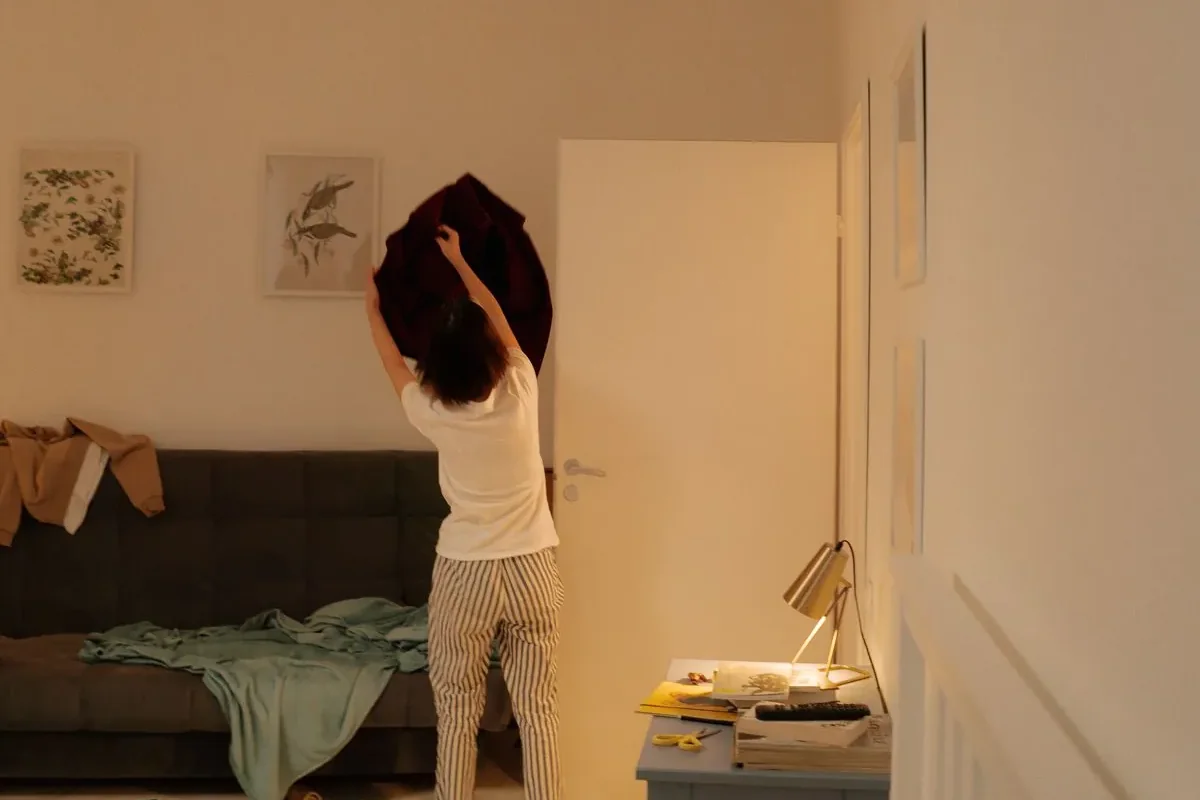
You will miss a day. A late meeting, a bad night, a friend who drops by. The rule is simple, and it is the only rule in this article that sounds strict: never do two sessions in one day.
Move the missed session to the next day you have free, and leave the rest of the week where it is. Missed Monday? Do the wet rooms on Tuesday, and Wednesday stays dry work. If you miss the whole week, do not try to catch up on everything at once. Do the reset for two days, then pick the sessions up again on Monday. A cleaning schedule that survives a bad week is worth more than a perfect week followed by a month of nothing. The same rule holds for a missed reset. Skip one night and nothing happens. Skip three and the flat starts to slide, because the reset is what holds the sessions together. If that happens, do two resets in one day, morning and evening, and you are back where you started. Resets can double up. Sessions cannot.
The 7-day version, if three days is not enough

Three days suits a studio or a one-bedroom flat. A busier household, or a one-bedroom flat with two people working from home, might want a job every day instead. The plan below keeps each day to about 20 minutes, and the days are set out differently from the usual Monday to Friday maps, so you are not just copying someone else’s week. If you work from home, fold the reset into your lunch break instead of the evening. A ten-minute reset at midday breaks up the workday, and the flat is tidy by the time you log off.
- Sunday: laundry and sheets.
- Monday: living room and dusting.
- Tuesday: kitchen.
- Wednesday: bathroom.
- Thursday: bedroom and entry.
- Friday: floors.
- Saturday: rest, or one small job you skipped.
If even that feels like too much, go back to the three-day plan. The point of a cleaning schedule is not to fill every day. It is to make sure the work gets done in the time you actually have. Keep Saturday free on purpose. A week with no rest day in it is a week you will quit, and the 7-day version already asks for more than the 3-day one.
Room by room: what gets done where
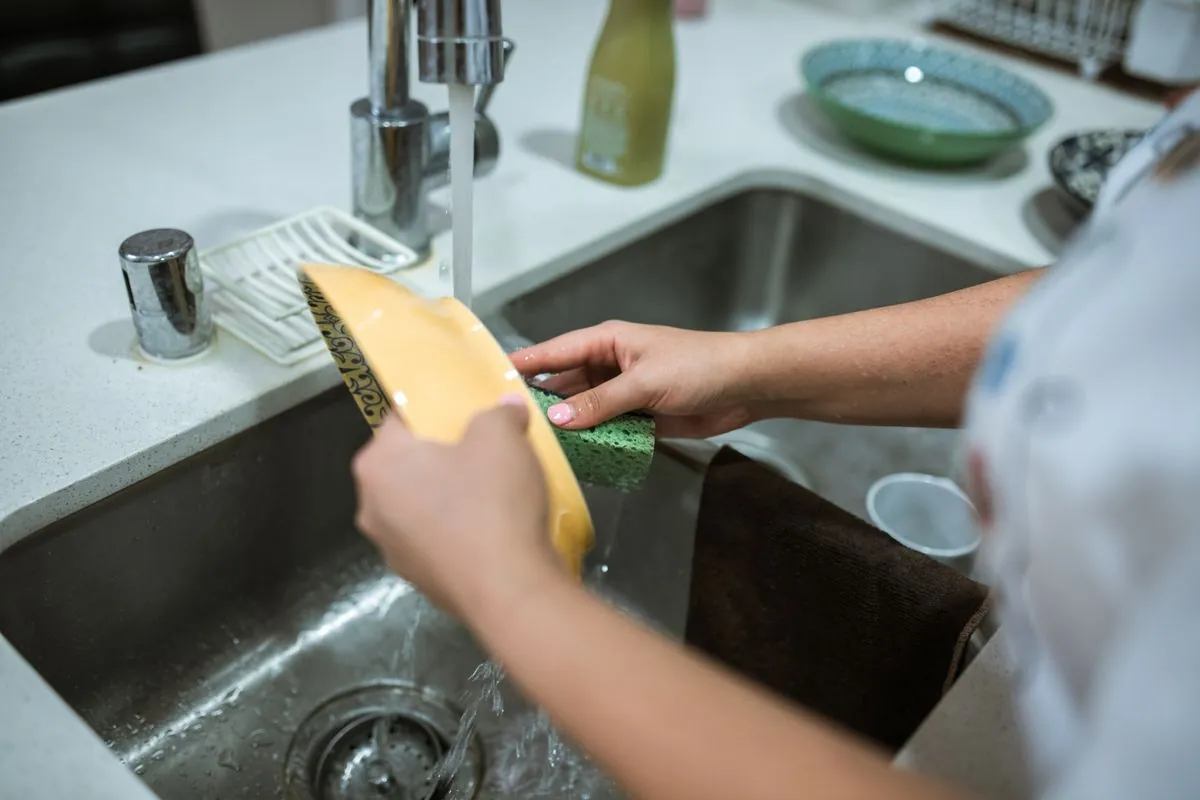
If you would rather think in rooms than in days, here is the same work, room by room. Every job below already sits in one of the three sessions of this cleaning schedule, so this is a different way to read the plan, not extra work.
Kitchen: daily, dishes and counters. Weekly, stove, bin and floor. Monthly, fridge and oven. Wipe the stove once it has cooled, and keep a small bin for food scraps by the sink so peelings never sit on the counter.
Bathroom: daily, a quick sink wipe. Weekly, toilet, shower, mirror and floor. Monthly, grout and the shower head. If you have a squeegee, run it over the shower glass after your morning shower. Thirty seconds a day beats twenty minutes of scrubbing limescale once a month.
Bedroom: daily, make the bed. Weekly, sheets, dust and floor. Monthly, air the mattress and tidy the wardrobe. Keep one drawer for clothes that need mending, so they stop living on a chair.
Living room: daily, cushions and clutter. Weekly, dust and vacuum. Monthly, sofa cushions and windows. Fluff the sofa cushions when you stand up in the evening. It takes seconds, and a sofa that looks sat-in all week makes the whole room look untidy.
Entry and laundry: daily, shoes in their place. Weekly, hooks, mat and one laundry load. Monthly, a coat clear-out and a door wipe. Keep a small brush by the door for muddy shoes, and hang the mat outside to air once a month.
Renting? Three things worth knowing

This whole plan is renter-friendly. Nothing in it needs a deep clean with harsh chemicals, and nothing needs big equipment. Three things are worth remembering. First, use mild cleaners and keep the strong stuff in the shop. Second, tell your manager about leaks or damp patches instead of scrubbing over them. Third, keep noisy jobs like vacuuming to daytime hours, and treat a shared laundry room like an appointment, not a hope.
Questions people ask
How long does this cleaning schedule take each week?
The three sessions take about an hour and a half, and the daily reset adds about ten minutes a day. All in, this cleaning schedule runs about two and a half hours a week, and most of it happens in ten-minute pieces, which is why it feels shorter than one big clean.
What if I miss a whole week?
Start again with the reset, and pick the sessions up on Monday. Do not try to do two sessions in one day to catch up. A missed week costs you nothing if the next week starts clean.
Do I need any special products?
No. A multipurpose spray, dish soap, a sponge, a cloth, and a broom or a vacuum cover everything in this article. Nothing here needs harsh chemicals or anything you have to buy specially.
How do I keep it going after the first month?
Check in after two weeks. If one session always runs long, move one job from it to another day. The monthly rotation keeps the plan fresh, and a small change beats a big restart.
What to do first
Do not start with a big clean. Start with tonight.
- Do the 10-minute reset after dinner tonight.
- Pick your three days for the cleaning schedule. Monday, Wednesday and Saturday work for most people, but any three days with a gap between them will do.
- Put the first monthly job on the calendar, so it does not get forgotten.
By next Saturday the flat will feel different, and you will have spent less time on it than the one big clean that never happened.